Insider · 3 min read
Biostimulators: filler that builds collagen
Sculptra, Radiesse, and the difference between replacing volume and prompting support.
Published July 24, 2026
There's a distinction in injectables that explains a lot about good results. Some fillers replace volume directly. Others prompt the skin and soft tissue to build more of their own support over time. Both can belong in aesthetics, they just do different jobs. Traditional hyaluronic acid fillers, including the Juvéderm and Restylane families, are gels that occupy space as soon as they're placed. They can smooth a fold, restore a contour, or refine a feature with a result that's visible quickly and, in many cases, reversible with hyaluronidase.
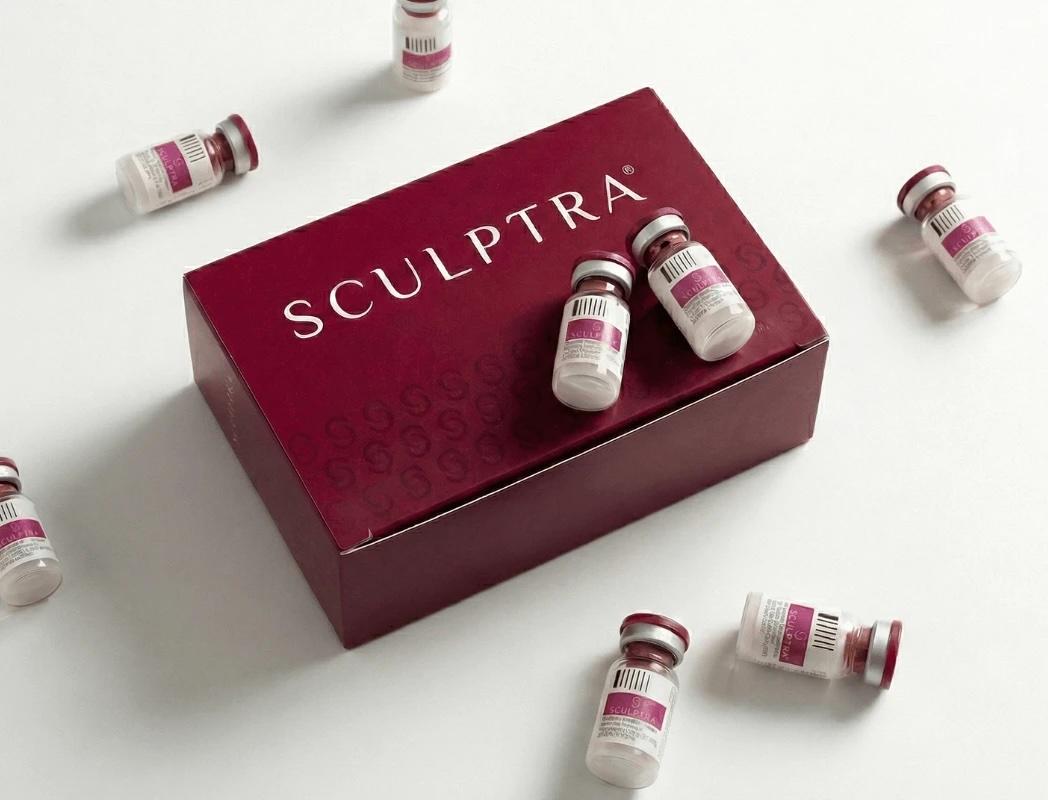
Biostimulatory injectables work on a slower timeline. Sculptra is made with poly-L-lactic acid, or PLLA. Radiesse is made with calcium hydroxylapatite, or CaHA. Depending on the product, dilution, placement, and indication, they can provide some structural effect, but their larger value is collagen stimulation. They ask the body to rebuild support gradually.
How they actually work
PLLA is biocompatible and biodegradable. Once placed, it creates a controlled tissue response that recruits fibroblasts and supports new collagen formation over months. The material is resorbed over time, while the collagen response can persist beyond the treatment session itself.
CaHA behaves differently, and Radiesse can be used in more than one way. Placed for structure, it can behave more like a supportive filler. Diluted or hyperdiluted, it's often used as a collagen-stimulating treatment for skin quality and firmness. This is why the word biostimulator is useful, but never enough on its own. Technique determines the result.
What that means for you
Biostimulators reward patience. Results usually build through a series and continue developing over several months. They're often best for someone thinking in years rather than days: soft facial depletion, mild crepiness, early laxity, or the sense that the face has lost support rather than one specific line that needs filling.
The effect should read as structure and quality, not plumping. That's why the category fits so naturally with how Vera thinks about aesthetics. The goal was never to add more until the face looks different. It's to restore support with enough restraint that the result feels earned.
Provider judgment is the deciding factor. Biostimulators are technique-dependent, difficult to undo compared with HA filler, and better suited to some faces and some concerns than others. In skilled hands, they're one of the most elegant tools in the category. Used casually, they can become too much.
 App Store
 Google Play