Foundations · 3 min read
Clinical K-Beauty isn't what you think
Beyond sheet masks, ten steps, and bargain Botox.
Published July 24, 2026
The first global version of K-Beauty was a bathroom shelf story. Essences, barrier care, sunscreen discipline, glass skin, and the ten-step routine. It taught people to think about hydration, consistency, and skin quality long before those ideas became mainstream in Western aesthetics.
Clinical K-Beauty is the treatment-room expression of the same instinct, and it has little to do with importing Korean devices or chasing whatever's popular in Seoul. It's a way of thinking: skin maintained with precision before it needs rescuing.
The philosophy comes first
The word behind it is Gwallee, or proactive maintenance. Western aesthetics has often been organized around correction. A line deepens, pigment settles, laxity appears, and then the search begins for a dramatic fix. Clinical K-Beauty starts earlier and moves more quietly. The goal is to tend the skin in small, considered steps so the larger correction is less often necessary.
That philosophy changes what matters. The focus isn't only lift or volume, though those can matter too. It's tone, texture, hydration, elasticity, pores, pigment, recovery, how skin behaves over time. The face isn't treated as a set of isolated problems here. It's treated as a system that responds to cadence.
What it looks like in practice
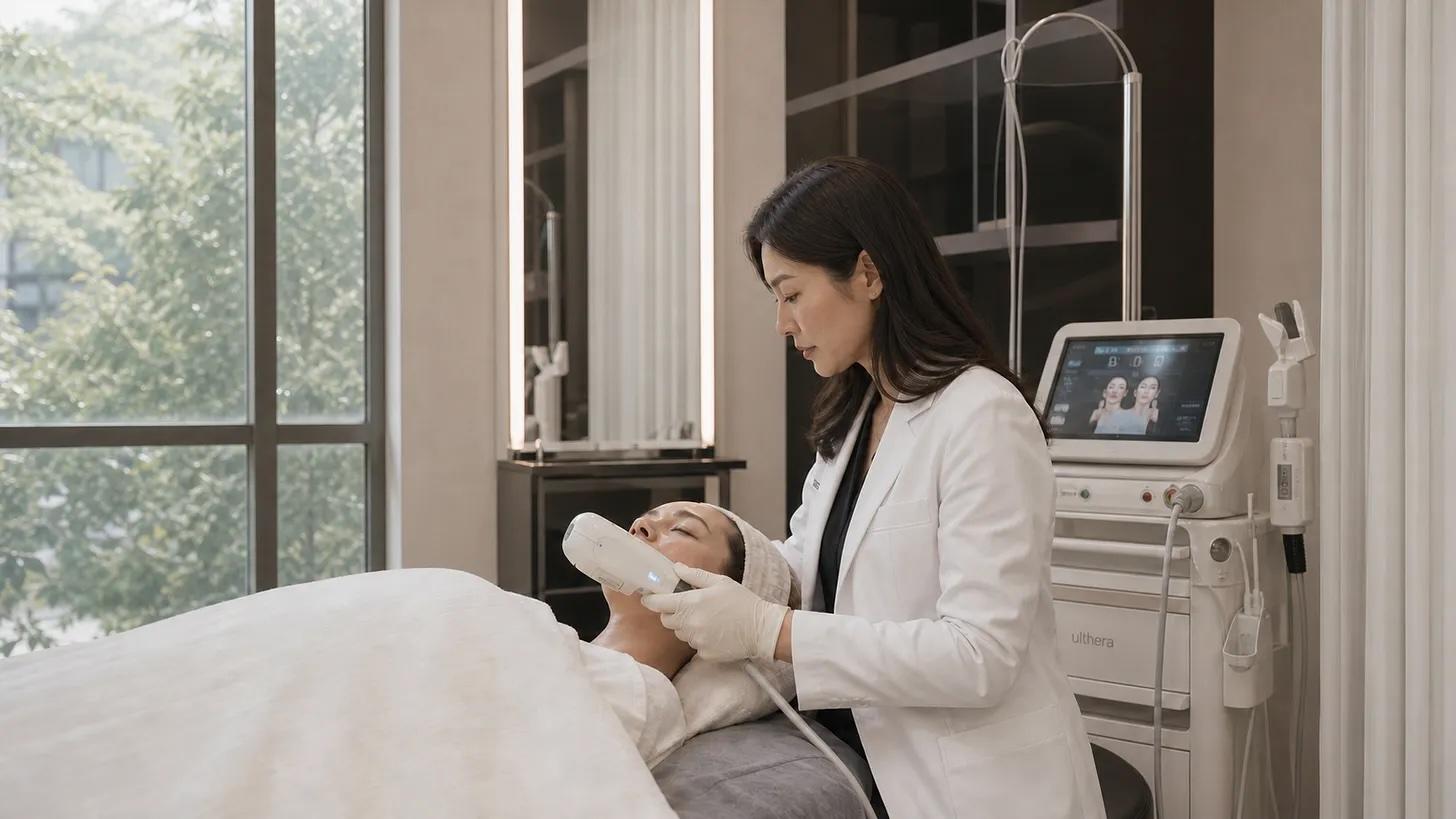
Clinical K-Beauty favors skin quality as a primary outcome. Treatments such as polynucleotide boosters, HA skin boosters, microneedling, gentle lasers, and energy-based tightening are often used in sequence rather than as single dramatic interventions. The exact tools vary by country, regulation, clinic, and patient. But the pattern holds: lighter moves, repeated intelligently, restrained enough that the result reads as healthier skin, not obvious work.
Subtlety is part of the standard. A good result shouldn't require explanation: skin that looks clearer, calmer, firmer, more reflective, better maintained. The goal was never to make a face look treated, only to make the skin look cared for.
Korea's aesthetic market is also intensely competitive, which has helped push rapid refinement in devices, injectables, protocols, and patient expectations. That pace doesn't make every new treatment automatically right, and it doesn't erase the need for evidence. It does explain why so much of the current skin-quality conversation keeps pointing back to Seoul.
A more considered relationship with aging
Clinical K-Beauty assumes you've got decades ahead of you, and that your skin's worth tending the whole way through, not rescuing once things go wrong. It's the thinking behind Vera's plans, our verified clinic network, and the way we talk about treatment: quality before transformation, cadence before rescue, judgment before hype.
 App Store
 Google Play