Insider · 3 min read
Which skin booster is actually for you?
Rejuran, Juvelook, Profhilo: three technologies, three different jobs, decoded.
Published July 24, 2026
Let's start with the word itself, because "skin booster" gets thrown around constantly and defined almost never.
A skin booster is an injectable that improves the quality of your skin, so its hydration, texture, elasticity, and glow, rather than adding shape or volume the way a traditional filler does. Filler sits under a line to plump it. A booster goes into the skin to make the skin itself work better, hold water, and look brighter from within. Same needle, completely different goal.
Once you know that, the confusion clears up fast, because the boosters everyone names aren't versions of one thing. Each one works differently, and each is genuinely better at a different job. Here's the field, laid out plainly.
Rejuran, the repair signal
What it is: polynucleotides (PDRN/PN), purified DNA fragments, often from salmon. What it does: supports your skin's own repair environment, so quality, hydration, and elasticity. Think of it as the "help my skin behave like younger skin" booster. Where the evidence stands: promising, though still built on fairly small studies of modest quality (Lampridou et al., J Cosmet Dermatol 2025). Best for: dullness, fine crepiness, that tired-looking quality, overall skin health.
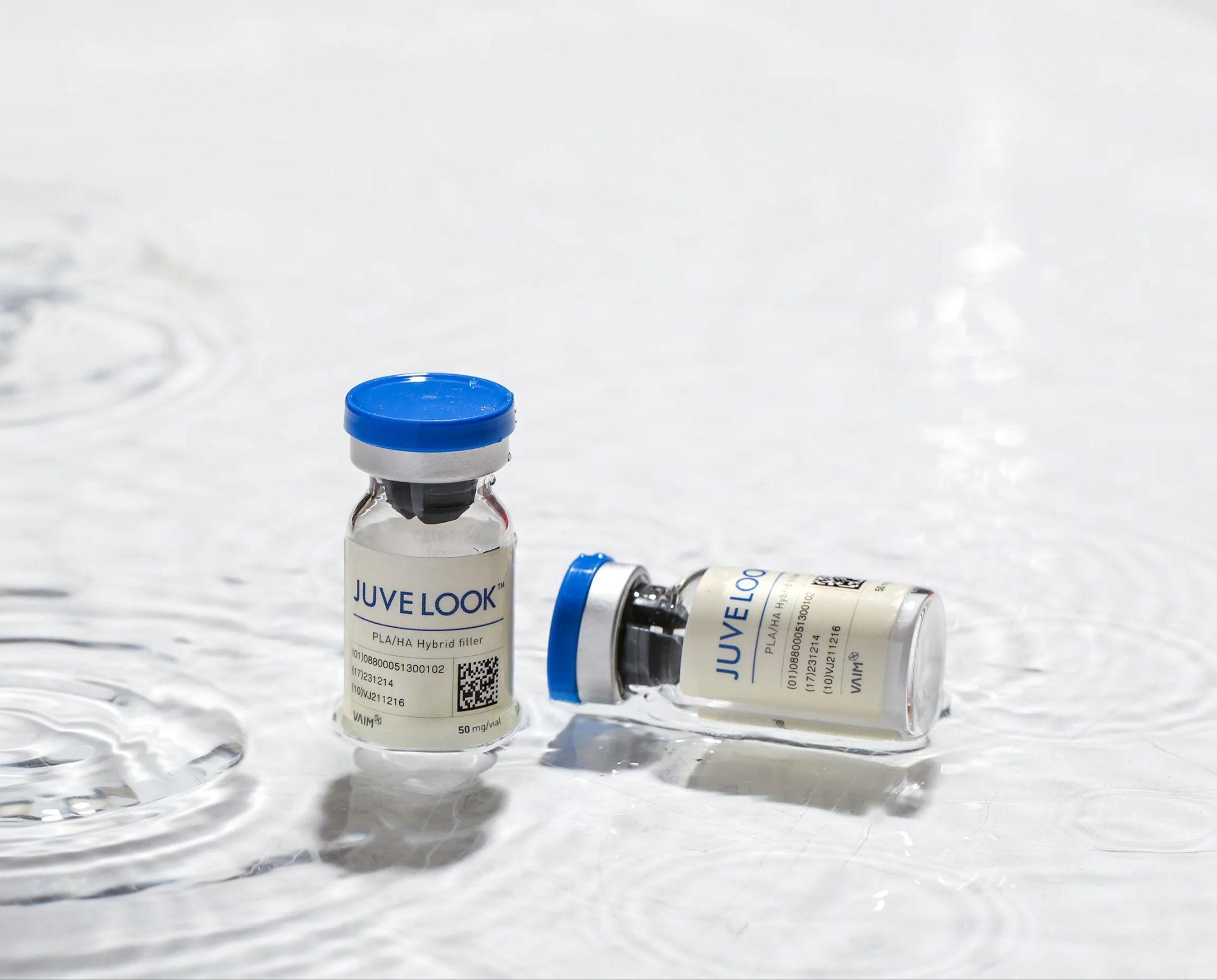
Juvelook, the collagen stimulator
What it is: PDLLA (poly-D,L-lactic acid) microparticles, usually paired with hyaluronic acid. What it does: two things at once. The HA gives you immediate hydration, and the PDLLA nudges your own fibroblasts to build new collagen over the following months. Where the evidence stands: part of the well-studied poly-lactic-acid biostimulator family (PLLA review); the specific hybrid formula is newer. Best for: early laxity, texture, pores, skin that wants structure rebuilt, not just watered.
Profhilo, the hydrator that remodels
What it is: a stabilized blend of high- and low-weight hyaluronic acid. It's pure HA, but it isn't a shaping filler. What it does: spreads through the skin to deeply hydrate and "bio-remodel," lifting overall firmness and quality and encouraging a little collagen and elastin, rather than adding contour. Where the evidence stands: one of the better-studied boosters, with systematic-review support (Profhilo systematic review;hybrid HA for skin roughness and laxity). Best for: dehydrated, lax, faintly crepey skin that wants glow and firmness without any added volume.
The one thing that actually matters
Look at the shape of it. These aren't better and worse versions of one product. They're answers to three different questions:
- Want your skin to repair and behave better? That's the polynucleotide lane, so Rejuran.
- Want to rebuild collagen and structure? That's the biostimulator lane, so Juvelook and its PLLA relatives.
- Want to deeply hydrate and remodel quality? That's the HA bio-remodeling lane, so Profhilo.
(There's a newer entrant too, Re20, which takes a fourth approach and resupplies the skin's whole matrix. It's early, and we break it down on its ownhere.)
Price is the worst way to choose between these, because it tells you nothing about which mechanism your skin actually needs. A cheaper booster aimed at the wrong problem is the expensive one.
So the smart order of operations is the boring one. Get your concern read first, whether that's quality, laxity, hydration, or structure, and then pick the technology. In that order, all of these are lovely tools. In the wrong order, none of them quite land.
 App Store
 Google Play