Foundations · 5 min read
Ultherapy vs. Thermage
The lift without the facelift
Published August 21, 2026
Two ways to tighten skin without surgery, and why the right answer starts with what is actually moving.
They are often offered as a choice between two versions of the same thing. Ultherapy or Thermage. Ultrasound or radiofrequency. Pick your machine, collect your lift.
That framing is tidy, and not especially useful. The two devices put heat into different patterns and depths. More importantly, “I want a lift” can mean loose skin, a softer jawline, lost facial volume, or simply a face that looks tired. No device solves all four.
Ultherapy goes deep and precise
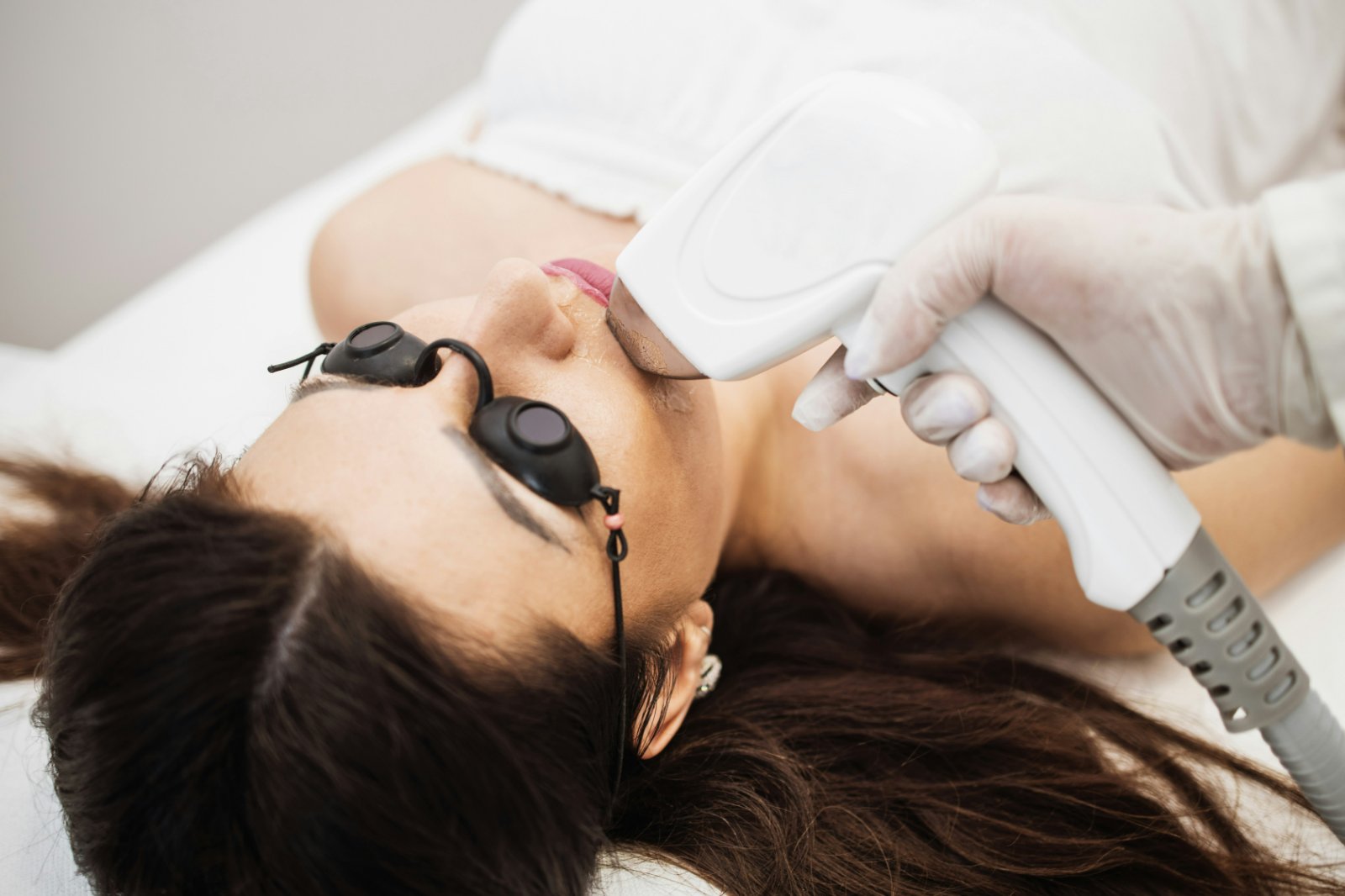
Ultherapy uses microfocused ultrasound with visualization. The provider can see the tissue layers on a screen, then place tiny points of thermal energy at set depths beneath an intact skin surface. Those points start a wound-healing response and new collagen remodeling over the months that follow.
The useful word is focused. Ultherapy does not heat a broad sheet of skin. It creates small, discrete coagulation points, including at deeper fibromuscular tissue planes. That makes it a logical tool for mild to moderate laxity around the brow, under the chin, jawline, and neck. It does not add back volume, erase pigment, or resurface rough texture.
Results are gradual and usually subtle. In a randomized split-face trial, microfocused ultrasound and monopolar radiofrequency both improved mild to moderate face and neck laxity through six months. Neither outperformed the other. That is a useful correction to the idea that one machine is simply stronger.
Thermage heats a broader layer
Thermage uses monopolar radiofrequency. Rather than placing rows of tiny focal points, it creates more diffuse heating through the dermis and nearby tissue while cooling protects the surface. Existing collagen contracts, then slower remodeling follows.
That broader pattern tends to make sense when the concern is mild looseness with crepey texture or a general loss of firmness. Thermage can be used around the eyes as well as the face and body, depending on the approved tip and a provider’s assessment. It is still a tightening treatment, not a replacement for lost fat or bone support.
The experience is different, too. Both treatments can hurt, despite the “no downtime” language around them. Ultherapy is often described as sharp, deep pulses. Thermage feels like repeated heat. Redness and swelling are usually brief; tenderness or altered sensation can last longer. Technique, energy, coverage, and anatomy all shape both the result and the risk.
The question underneath the question
If skin is mildly loose but facial volume is still good, either technology may earn a place in the plan. A provider may favor focused ultrasound for a deeper lifting goal and monopolar RF for more diffuse tightening. Some plans use both, but “different depths” is not, by itself, proof that everyone needs the combination.
If the face looks heavier because tissue has descended, a tightening device may help a little. If it looks hollow because fat has disappeared, more heat may be exactly the wrong instinct. And when laxity is substantial, neither device can reproduce the tissue repositioning of surgery. The honest consultation sometimes ends without a machine.
That is the part worth protecting. Ultherapy and Thermage are real technologies with real, modest effects. They work best when the diagnosis is more precise than “aging,” the settings respect your anatomy, and the expected result is refinement, not a facelift without the scar.
 App Store
 Google Play