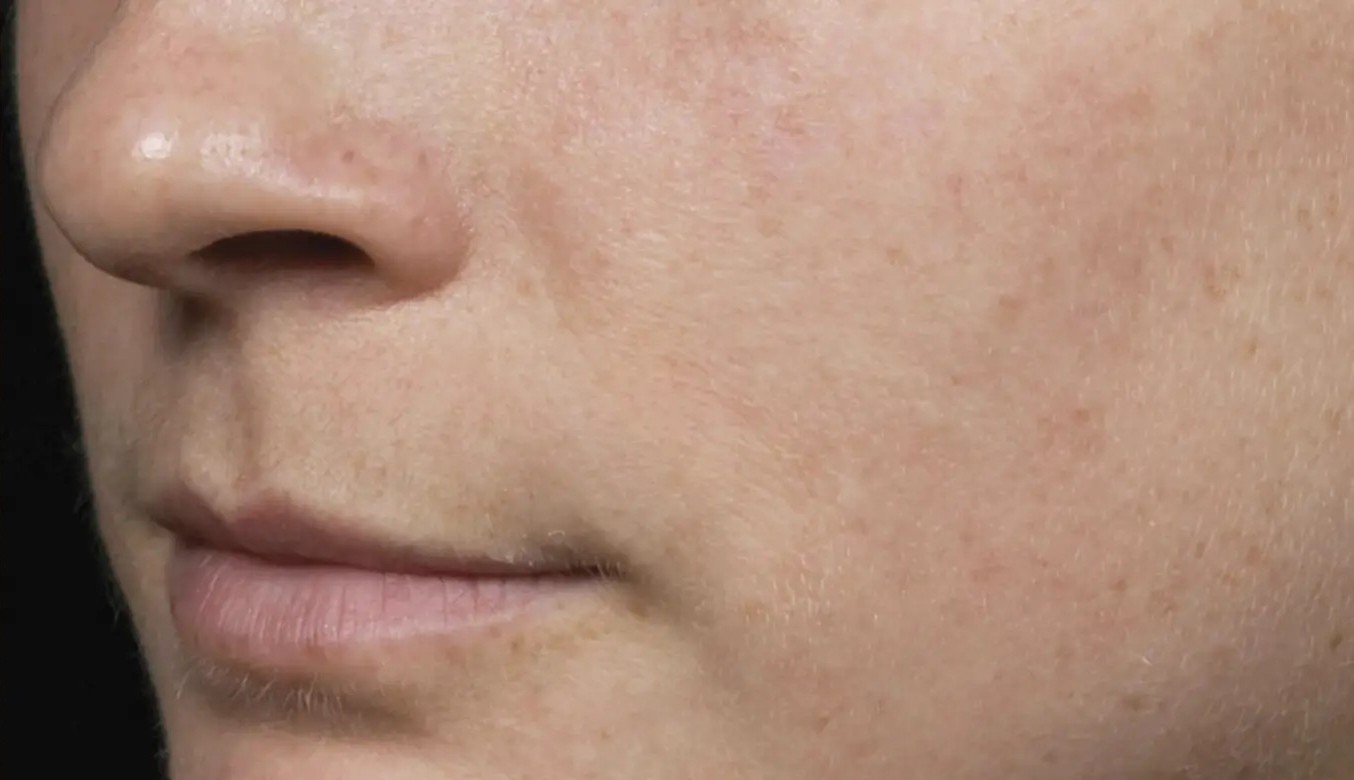
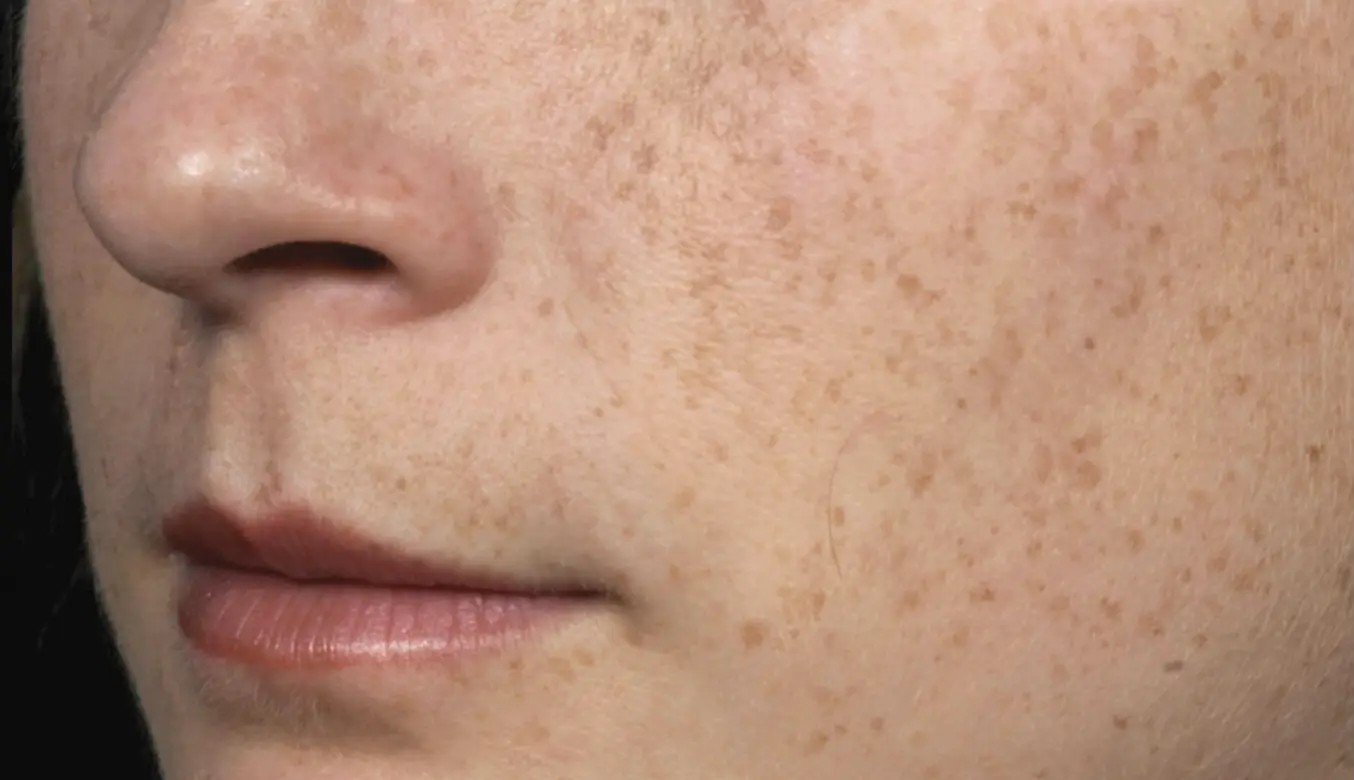
How does Fraxel Laser work?
Fraxel uses fractional photothermolysis, a principle pioneered by Harvard researchers in the early 2000s. Instead of treating the entire skin surface (as older ablative lasers did), a fractional laser creates thousands of microscopic thermal treatment zones (MTZs), tiny columns of laser energy that penetrate to programmable depths[2], while leaving the surrounding tissue intact.
The intact tissue acts as a reservoir for healing, allowing rapid recovery while the thermal injury in the MTZs stimulates collagen remodeling, pigment dispersion, and resurfacing of damaged skin. The body replaces the micro-columns of treated skin with new tissue, improving texture, reducing pigmentation, and building new collagen simultaneously.
▸
Fraxel Restore (1550nm) treats approximately 20–25% of the skin surface per session at standard settings, the remaining 75–80% of intact tissue enables the fast recovery that distinguishes fractional[1] from fully ablative resurfacing.
The Fraxel Dual system offers two wavelengths: 1550nm (erbium:glass, non-ablative) for deeper collagen remodeling and pigmentation, and 1927nm (thulium, non-ablative) specifically targeting superficial pigmentation and sun damage. Fraxel Repair uses CO2 energy for fully ablative treatment with more dramatic but longer-recovery results.
What can Fraxel Laser treat?
Fraxel is FDA-cleared for multiple skin concerns and has more published clinical evidence than almost any other fractional laser:
- Actinic keratoses (AKs): Fraxel Restore is FDA-cleared for AK treatment, pre-cancerous sun damage lesions
- Sun damage and photoaging: Age spots, solar lentigines, uneven texture from UV exposure
- Acne scars: Rolling and boxcar scars respond well to the collagen remodeling stimulus
- Melasma: The 1927nm wavelength specifically targets superficial melanin deposits; requires careful management to prevent rebound
- Fine lines and wrinkles: Periorbital wrinkles, lip lines, nasolabial folds
- Surgical and traumatic scars: Improves scar texture, color, and pliability
- Stretch marks: Off-label but well-documented application
The 1927nm thulium wavelength (Fraxel Dual) is particularly effective for superficial pigmentation and sun damage and has a shorter recovery (2–3 days) than the 1550nm treatment, making it popular for people who need a "lunch-break" approach.
How is Fraxel different from Halo and MOXI lasers?
All three are fractional laser devices in the resurfacing category, but they occupy different positions on the aggressiveness spectrum. Fraxel (1550nm non-ablative or CO2 ablative) targets deeper tissue, particularly dermal collagen and moderate-to-severe concerns like acne scars, deeper pigmentation, and textural irregularities. It requires more downtime but produces more significant structural results per session.
Halo (Sciton) is a hybrid fractional laser that delivers both non-ablative (1470nm) and ablative (2940nm) wavelengths simultaneously, offering a "split the difference" approach, more results than non-ablative alone with less downtime than fully ablative. MOXI (Sciton) is the gentlest of the three: a non-ablative 1927nm fractional laser best suited for mild sun damage, early photoaging, and skin maintenance with minimal downtime (1–2 days).
In terms of aggressiveness: MOXI (mildest) → Halo (moderate) → Fraxel Restore (moderate-aggressive) → Fraxel Repair CO2 (most aggressive). Choosing the right device depends on the concern severity and tolerable downtime.
What does the Fraxel treatment process look like?
A standard Fraxel Restore session takes 20–45 minutes. Here's the typical process:
Pre-treatment prep: Topical numbing cream (EMLA or similar) is applied 45–60 minutes before treatment. Antiviral prophylaxis may be prescribed if you have a history of cold sores.
Skin cleansing: The treatment area is thoroughly cleansed. A blue dye (Fraxel's guide dye) is applied to help the system track coverage evenly across the treatment area.
Laser passes: The Fraxel handpiece is moved across the skin in a smooth, overlapping pattern. You'll feel heat and a prickling sensation, intensity varies by energy settings. A forced cold air device blows across the skin to reduce discomfort.
Immediately after: Skin appears red and swollen, similar to a moderate sunburn. A soothing mask or cool compress is applied. You'll be sent home with aftercare products.
Days 1–5: Skin develops a "bronzed" or sandpaper texture as the micro-columns of treated skin shed. This is called MEND (Microscopic Epidermal Necrotic Debris) and is normal. Do not pick.
Day 5–7: Skin has typically shed to reveal fresher, smoother texture underneath. Light makeup can typically be worn after day 5–7.
Who is a good candidate for Fraxel Laser?
Fraxel delivers best results for people who:
- Have moderate to significant sun damage, age spots, or photoaging changes
- Have acne scarring, particularly rolling and boxcar scar patterns
- Have melasma and can commit to strict sun protection before and after treatment
- Are Fitzpatrick skin types I–III (lighter skin tones) for the most predictable results
- Can take 5–7 days of social downtime after treatment
- Are not on isotretinoin within the last 6–12 months
Fraxel requires more caution in darker skin tones (Fitzpatrick IV–VI) due to risk of post-inflammatory hyperpigmentation, especially at aggressive settings. Proper pre-treatment with tyrosinase inhibitors and conservative initial settings are essential for these people.
▸
In a landmark clinical study, Fraxel Restore at 1550nm produced 51–75% improvement in actinic keratoses[4] (pre-cancerous lesions), an outcome that led to its FDA clearance for this indication and differentiated it from purely cosmetic laser treatments.
Not sure if Fraxel Laser is right for you?
Download Vera to see what to consider first, what can wait, what it may cost, and which Vera Verified providers you can book for a consult.
Download Vera
What are the risks and side effects of Fraxel Laser?
Fraxel has a strong safety profile when performed appropriately, but the following risks are important to understand:
- Post-inflammatory hyperpigmentation (PIH): The most common serious complication, more frequent in skin tones III–VI. Usually resolves with proper management[3] (tyrosinase inhibitors, sun protection).
- Prolonged redness (erythema): Most people are red for 5–7 days; some experience persistent redness for 1–4 weeks at aggressive settings
- Swelling (edema): Common for 2–3 days, particularly under the eyes
- Herpes simplex reactivation: People with a history of cold sores should receive prophylactic antiviral medication before treatment
- Acne flares: Temporary increase in breakouts can occur during healing; usually self-limiting
- Infection: Rare with proper aftercare; use of prescribed topical antibiotics and gentle cleansing reduces risk
- Scarring: Very rare with appropriate technique and settings; aggressive settings on susceptible people can cause permanent textural changes
How much does Fraxel Laser cost?
Fraxel pricing varies by device type, treatment area, and provider market:
- Fraxel Restore (1550nm), face, per session: $1,000–$2,000
- Fraxel Dual (1550 + 1927nm), face, per session: $1,200–$2,200
- Fraxel Repair (CO2), face: $2,000–$4,000 per session
- 3-session course (Restore): $2,500–$5,000 bundled
- Neck or chest add-on: $400–$800 additional
Pricing for Fraxel is generally set per session by energy settings (MTZ density and depth) rather than flat area pricing. A "full" Fraxel treatment at high settings is more expensive than a lighter maintenance treatment. Always clarify energy settings before booking.
Fraxel is not covered by insurance for cosmetic indications. However, Fraxel Restore is FDA-cleared for actinic keratoses: a medical indication, and treatment for AKs may qualify for insurance coverage depending on your plan. Discuss with your dermatologist.